

- Year
- 2023–24
- Role
- Research · Visual design · Installation
- Team
- Fan Xiang · Kaixi Chen · Zimu Li · Shunshan Zhu
- Commissioned by
- Capital Library, Beijing, China
- Source
- Historical playbills in the Capital Library collection
- Includes
- Interactive installation · Historical archive · Paper
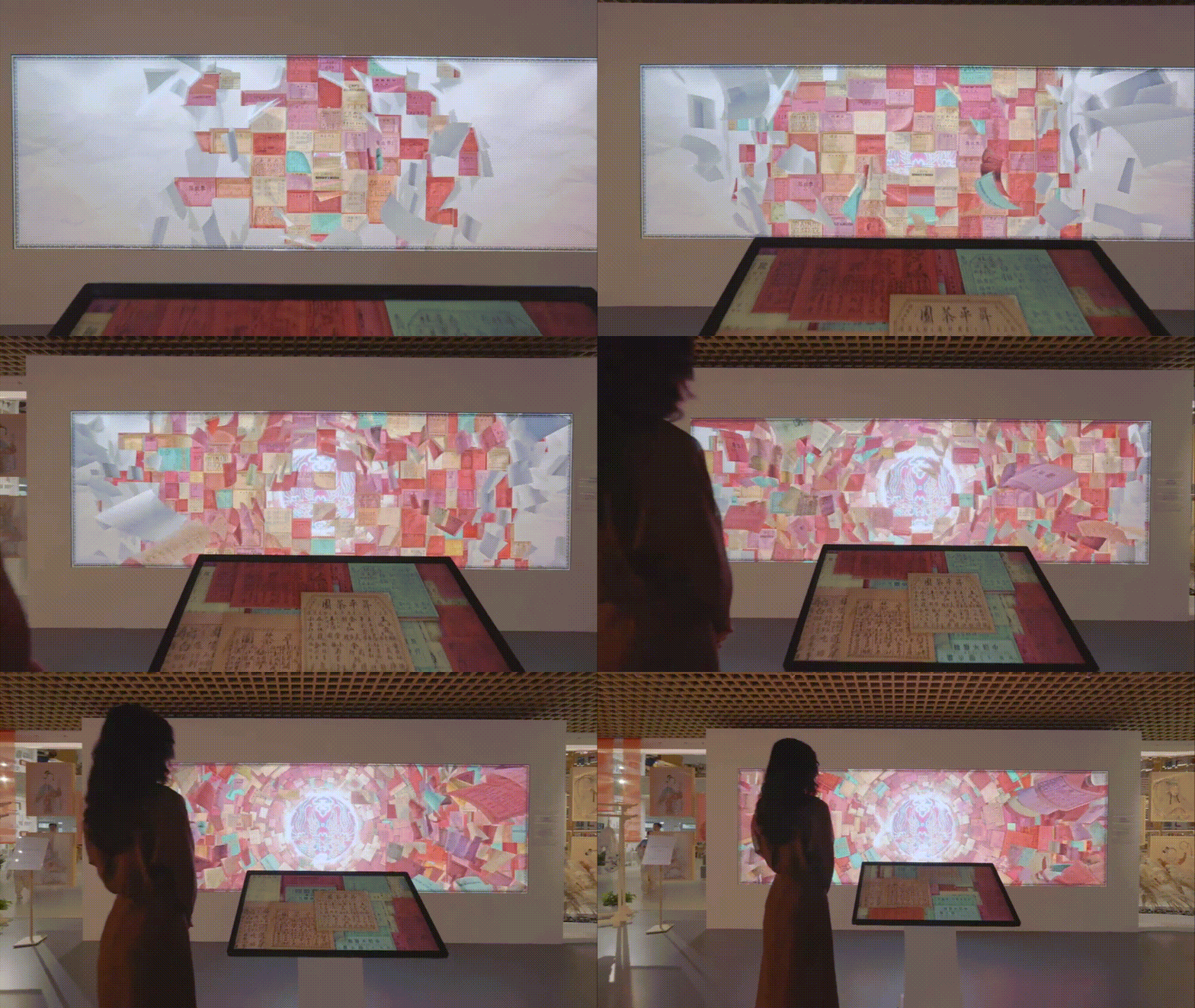
An interactive installation built from 458 historical Peking Opera playbills. It reconnects performances, theatres, opera titles, dates, and 3,659 performer names, shifting the historical view from a handful of stars toward the collective body that sustained the stage.
Original project record
View Information is Beautiful Awards entry ↗- Longlisted for the Information is Beautiful Awards 2024 in Arts, Entertainment & Culture.
- Commissioned by the Capital Library, Beijing, China, using historical playbills from its collection.
A view through the archive
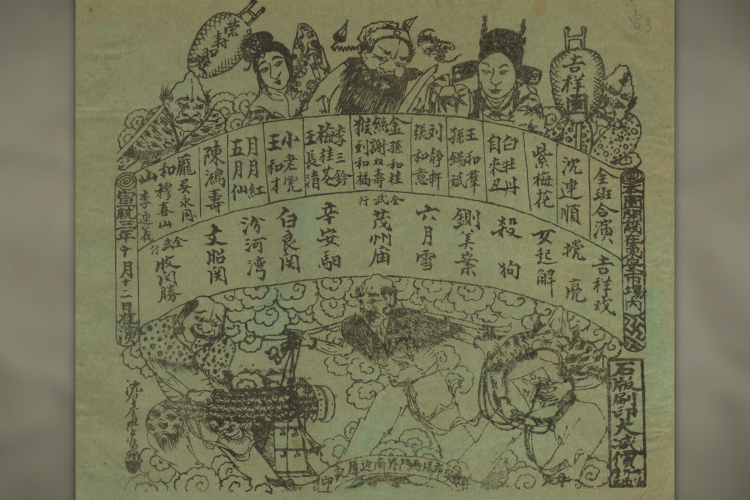
The project began with approximately 800 digitized playbills in the Capital Library collection. Of these, 458 documents from 1908 to 1942 could be read in sufficient depth, offering a partial but unusually detailed opening onto Peking Opera’s historical stage. The surviving collection is unevenly distributed across time.
Understanding the documents
The playbills record theatres, dates, opera titles, performers, ticket prices, and even snack prices. Their colored paper, woodblock calligraphy, movable type, illustrations, wear, and changing typographic hierarchy also reveal how performance culture and printing changed over time.
One larger playbill
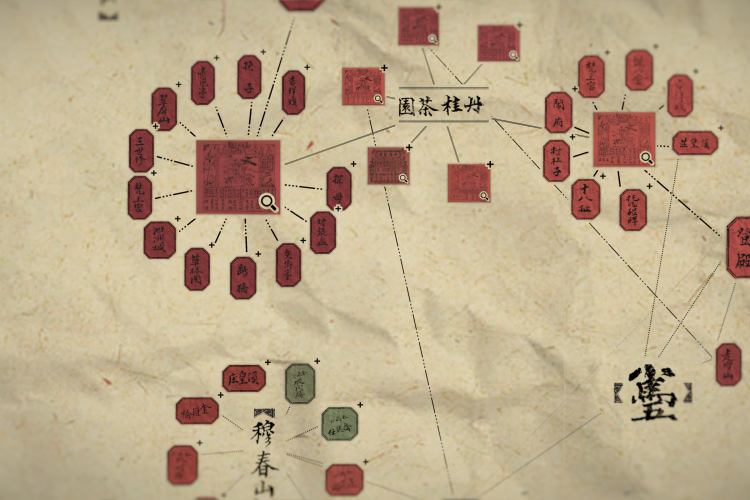
Transcription connected 1,156 opera titles with 3,659 performer names. Grand Playbill reunites these scattered records—not as a larger sheet of paper, but as a historical field in which viewers can move among theatres, performances, works, and people.
Keeping the archive visible
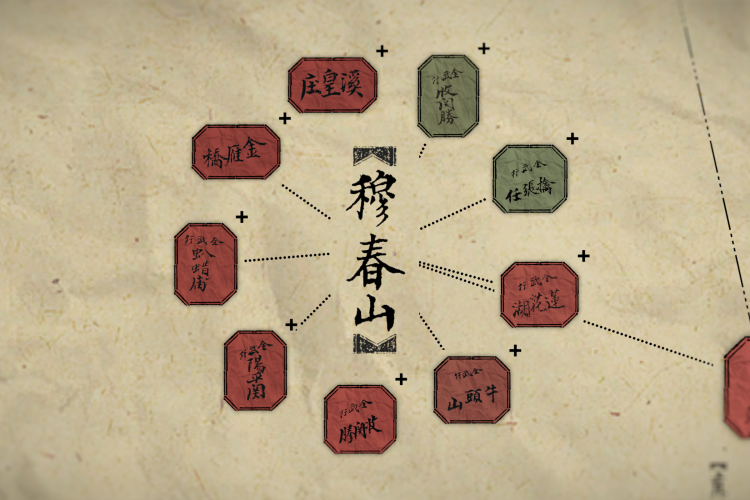
Each performer is represented by an image of their name cropped from an original playbill. The interface therefore preserves documentary texture instead of replacing historical evidence with generic nodes, while computational relationships make the collection searchable and comparable.
The ensemble behind the stars
At the exhibition, visitors repeatedly asked, “Where is Mei Lanfang?” Because name size follows recorded performance frequency rather than later fame, performers such as Gao Sibao, Li Jingshan, and Wang Fengqing can appear more prominently. The moment of confusion exposes the project’s central question: why do we remember only a few people when an art form is made by thousands?
Minor performers return to view
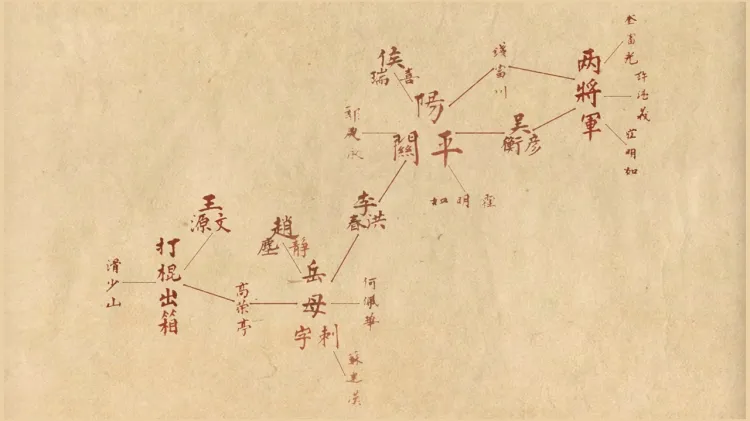
More than half of the performers in this archive appear only once or twice. Others, including comic and supporting actors, remain active across decades without entering familiar histories. Following co-performance links makes these brief presences and unexpected bridges—such as Gao Qingkui’s connection with both Mei Lanfang and Cheng Yanqiu—available for new inquiry.
A two-screen public research tool
Grand Playbill opened at Beijing City Library in Tongzhou on 24 June 2024. Visitors investigate on a touch screen while their choices reorganize a five-metre display behind it. Close inquiry and shared viewing happen together. The installation does not claim to be a complete history; it makes the archive’s limits visible and invites the public to formulate new historical questions.






Press
Interview with The Paper
Selected for the UNESCO World Design Cities Conference 2026
- Date
- 26–30 September 2026
- Location
- Shanghai, China